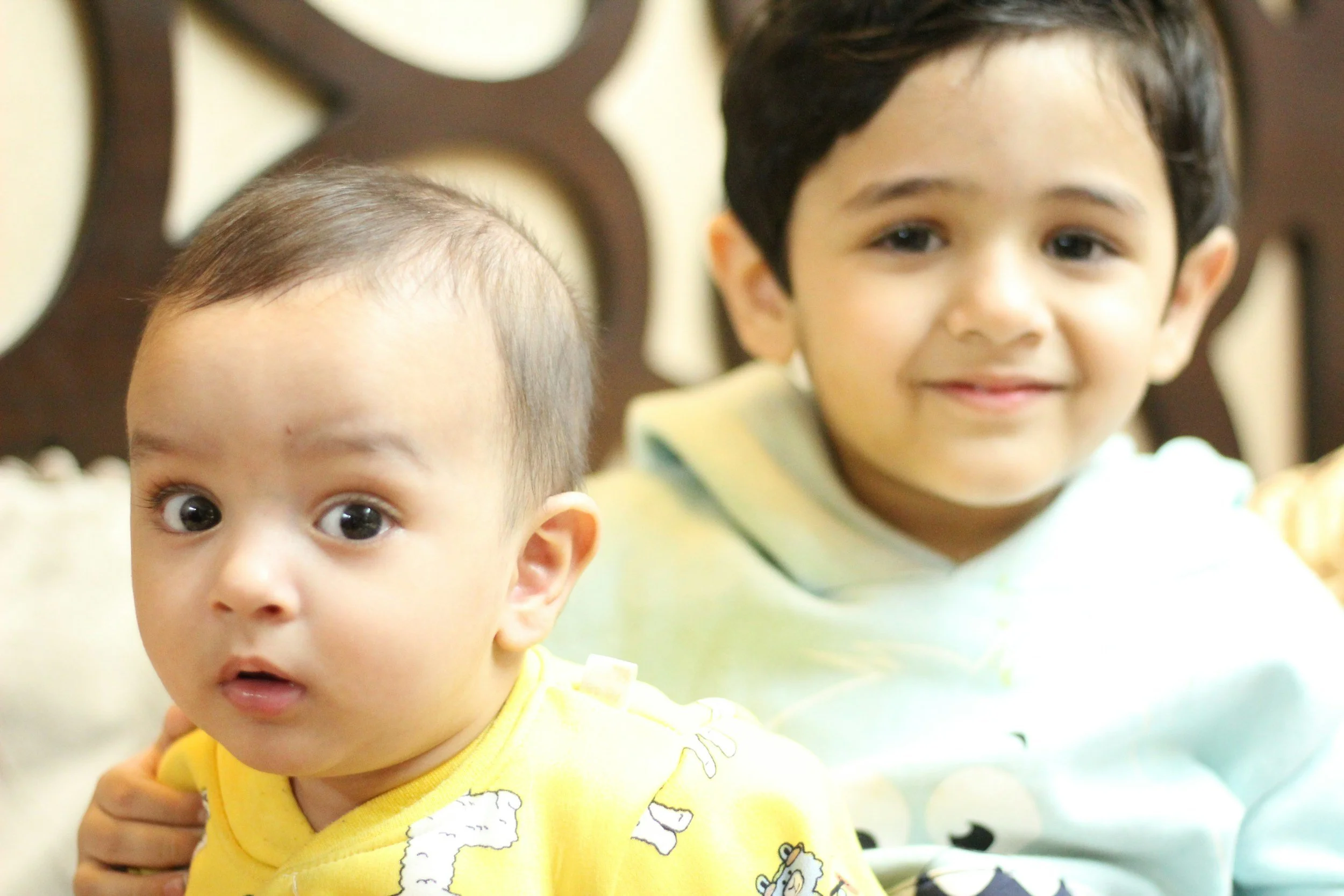
Bringing a new baby into the family is an exciting and often overwhelming experience. But for your older child, this change is completely life-altering. For this reason, it is important to understand their state of mind and to support their adjustment.
To understand what your first child is going through, it really helps to imagine your spouse telling you that since having a partner is so great, he or she would like bring home another one to be part of your family. Imagine that you are told by your spouse that both of you will be loved exactly the same, but the new partner will need much more of your time for a good while.
1. Presume that your child is often feeling upset about how busy you are with the baby, so it helps to point out that waiting for your turn is really hard and can make a person mad or sad. Allow the child to verbally express any and all feelings about the baby or Mommy and Daddy, even wishes that the baby would go away or that they hate you or the baby.
Respond with understanding and acknowledge that having a new baby is a big and hard change, that angry feelings are ok and everybody feels mad sometimes. Let her know that you will always love her no matter what and that it’s always good to share how she is feeling. Also remind the child that this will get better as the baby gets bigger, but for now, s/he can’t wait for things like his food or for his diaper to be changed. Tell her that when she was a baby, you never let her wait either.
2. Any physical aggression directed at the baby or either of you should be strongly prohibited, reminding the child that in your family, there is never hitting, and you would never let anyone hurt her either.
3. Express some of your own frustration with how many things the baby can’t do for himself, how much he cries, etc. Hearing you say some things that are not positive about the baby will help the older child to feel less guilty about her feelings and wishes.
(Guilt about angry feelings toward family members that the child then buries can lead to other emotional issues.)
4. Provide as much 1:1 time with the older child as possible. Dad, grandparents, and other family members can play an important role here. When taking her on an outing without the baby, or doing something special with her, emphasize how the baby is simply way too young to get to do these things. This will help her see the positive side of being the big sister.
5. Whenever your child expresses interest in helping, or displays affection or caring towards the baby, you can say “you’re really helping your brother/me”. In other contexts, you can remind her of how many things she will be able to teach him when he’s bigger.
6. It’s very helpful if your older child feels that the baby likes her. If he smiles at her, you can say “he especially likes/loves you”, or “he really likes when you do ______with her”.
It will also make your older child feel good to hear you tell others how positively the baby reacts to her.
7. Your older child may regress in some ways, like expressing a wish to nurse or drink from a bottle, putting a pacifier in her mouth, etc. Do not be alarmed by this, as these are typically passing interests. You can let her take a taste from your finger or a bottle, or try the pacifier for a minute if she insists, but remind her that she is a big girl who can already use big plates and cups, and that these baby items are the baby’s, just like her toys are just for her, because the baby can’t do the big person stuff. You can also show her photos of her nursing or drinking from the bottle. Finally, never hesitate to hold and rock your older child like an infant---you can tell her that you always love to cuddle her, that she was your first baby, and that will always make her extra special and your baby forever.
8. As your infant gets more active, make sure to help your older child protect her creations and very special toys from him; she should have input in what and how she is ready to share.
9. Make sure to transition your older child to a toddler bed well in advance of using the crib for the baby. This way, she will be less likely to feel that it was taken away from her.
It’s important to remember that, even when carrying out all these methods, it is natural for a first child to struggle with the profound changes that come with having a sibling. These struggles will ebb and flow as the baby develops. However, it is also likely that the older child will come to simutaneously feel affection and eventually love for the baby, as well as feel good about his or her own helping, caring, and teaching role.